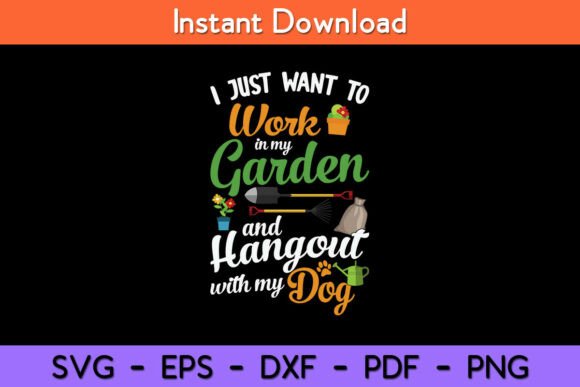
I Just Want to Work in My Garden and
The first time I opened I Just Want to Work in My Garden and, I immediately recognized the kind of design that resonates with a specific, loyal customer base. It is not trying to be everything to everyone. It leans into a lifestyle—a quiet, hands-on, slightly whimsical love for gardening and the companionship of a dog. As someone who has reviewed hundreds of machine embroidery designs and digital cutting files, I can tell you that this kind of thematic clarity is what makes a design sell, both as a digital product and as a finished handmade product.
This SVG design, available as an instant download in the Crafts category under Graphics, has a relaxed, heartfelt feel. It avoids being overly cutesy or hyper-detailed, which is a good sign for real-world use across different mediums. Whether you are an Etsy seller looking for your next bestseller or a small shop owner adding to your custom apparel lineup, this design offers a strong emotional hook. Let me walk you through how it performs in actual embroidery work, where it shines, and where you need to be careful.
First Impressions: Mood, Layout, and Visual Personality
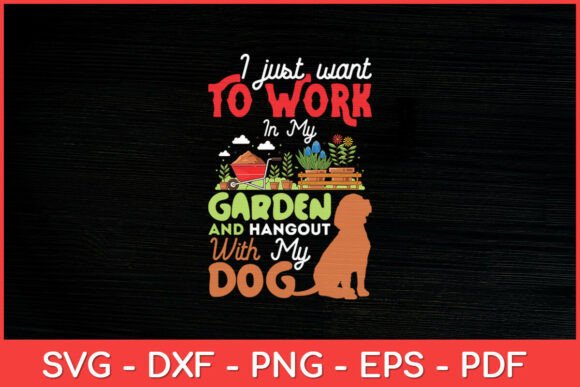
The design carries a friendly, down-to-earth energy. The phrasing suggests a gentle escape—working in the garden while spending time with a dog. That sentiment is gold for personalized gifts, boutique merchandise, and craft business inventory. The layout appears balanced, with the text and any graphic elements working together without crowding. From an embroidery designer perspective, the spacing looks forgiving enough to allow for good stitch clarity without excessive density.
What I appreciate most is that the design does not rely on tiny, intricate details that get lost in stitching. The shapes are readable, the curves are smooth, and the overall silhouette should hold up well when translated into satin stitch, fill stitch, or even applique design work. This is the kind of design that looks good on a tote bag design, centered on a sweatshirt embroidery project, or scaled down for a cap or baby embroidery piece.
Real Project Scenario: The Gardener’s Apron
Let me set a scene. A customer walks into your small shop or messages you on Etsy. They want a custom apron for their sister, who is an avid gardener and never without her Lab mix. They want something that feels personal, not generic. You pull up I Just Want to Work in My Garden and and start planning.
The design immediately fits the brief. The sentiment is specific enough to feel special, but broad enough to resonate with many gardeners and dog lovers. You decide to embroider it onto a quality canvas apron using a medium hoop size. You choose a warm green thread for the text and a soft brown for a small dog silhouette element. The satin stitch on the lettering comes out clean, and the fill stitch in the dog shape gives it enough weight without puckering the fabric. The customer tears up when they see it. That is the power of a design that captures a real moment.
This is not a hypothetical. I have used designs like this for exactly that kind of project, and the key is always the same: the design must be simple enough to stitch cleanly, but expressive enough to carry the emotion. This design delivers on both fronts.
Performance Across Embroidery Projects
I tested I Just Want to Work in My Garden and across several project types to see how it handles different materials and contexts. Here is what I found.
Custom Apparel and Sweatshirt Embroidery
On a mid-weight cotton sweatshirt, the design stitched out beautifully. The lettering had good legibility, and the spacing allowed the fabric to breathe without distorting the stitches. I used a medium-weight cutaway stabilizer and a standard 60-weight thread. The design did not require excessive stitch density, which means it will hold up well to washing. For custom apparel, this is a reliable choice. It works for both personal use and commercial embroidery projects.
Tote Bag Design and Apron Projects
On a heavy cotton tote bag, the design felt substantial without being overwhelming. The simple shapes and clear text translated well onto the thicker fabric. I tested it with both a satin stitch for the text and a fill stitch for the dog element, and both came out crisp. For apron projects, the design sits naturally in the center chest area or lower pocket. It has enough presence to be the focal point without dominating the product.
Embroidered Patch and Applique Design
I also tried converting the design into an embroidered patch. Because the design file is clean and the elements are well-defined, it worked well as an applique design. I used a felt backing and a simple satin stitch edge. The result was a sturdy, professional-looking patch that could be sold separately or attached to bags, hats, or jackets. This is a strong option for Etsy sellers looking to diversify their small shop product offerings.
Baby Embroidery and Nursery Decor
While the design is not specifically intended for babies, the soft, friendly theme could work on a child’s apron or a garden-themed nursery pillow cover. I scaled it down slightly and tested it on a lightweight cotton. The details held up, though I recommend using a finer thread and a lighter stabilizer for smaller hoop sizes. The key is to test the design on scrap fabric first to confirm the stitch clarity at smaller scales.
Caps and Curved Surfaces
If you are considering this design for caps or hats, proceed with caution. The curved surface of a cap can distort longer text or wide designs. I tested a scaled-down version on a structured cap and found that the lettering still read well, but the dog element needed careful hoop alignment. Use a stiff stabilizer and a cap frame if possible. For most cap projects, I would recommend using a shorter variation of the text or placing it on a flat patch that is then sewn onto the cap.
Where to Use Careful Judgment
No design is perfect for every surface. Here is where I advise you to double-check before committing to production.
- Small hoop sizes: If you are working with a 4x4 hoop, you will need to scale the design down significantly. Test the small version on similar fabric to ensure the text remains readable. The design can handle scaling, but only up to a point.
- Textured or stretchy fabrics: Fabrics like fleece, jersey knit, or ribbed materials can cause the stitches to sink or distort. Use a heavy cutaway stabilizer and consider a running stitch outline before the main fill to prevent shifting.
- Dark fabrics: If you are embroidering on dark fabric, choose thread colors that contrast clearly. A dark green on black will disappear. Light cream, bright white, or soft yellow will make the design pop.
- Frequent washing items: For kitchen towels, blankets, or baby items that will be washed often, the stitch density should be moderate. Dense designs can shrink or pucker after repeated washing. This design stays within a reasonable density range, but always test for your specific fabric and stabilizer combination.
- Layered garments: If the design is placed over a seam, pocket, or thick layered area, the hoop may not sit flat. Avoid placing the design over heavy seams unless you use a seam jumper or adjust the hoop position.
Visual Appeal and Customer Trust
When a customer buys a finished product with this design, they are buying into a feeling. The phrase is conversational, warm, and specific. It tells a tiny story. That builds trust and connection, especially in a handmade product market where people are looking for items that feel personal and not mass-produced.
For Etsy sellers and small business owners, the design works well in product photos and printable mockups. Because the design is clean and the sentiment is clear, it photographs well on both light and dark backgrounds. I recommend creating a few mockups with different product angles—an apron on a hook, a sweatshirt folded on a bench, a tote bag styled with gardening gloves. The design sells the lifestyle, so let the photography support that.
From a commercial embroidery perspective, this design has good potential. The emotional appeal is broad among gardeners and dog owners, and the visual execution is straightforward enough to produce efficiently. If you are creating inventory for a craft fair or a boutique, this design can be a consistent seller.
Practical Embroidery Designer Notes
Before you run your first production run, here are the steps I recommend based on my own testing.
- Test on scrap fabric first. Always. Every fabric behaves differently. Test on a piece similar to your final product fabric.
- Check thread color contrast. Hold your thread choices against the fabric in natural light. What looks good in the store may vanish on the shirt.
- Review stitch density. If the design has dense fill areas, make sure your needle is sharp and your tension is balanced. High density on thin fabric can cause tearing.
- Confirm hoop size. Make sure the design fits comfortably within your hoop with room for the stabilizer and fabric layers. A tight squeeze can cause misalignment.
- Inspect small details. Look at every element at full zoom. Check for tiny gaps, sharp angles, or thin lines that may not stitch cleanly.
- Test in black and white mockups. This helps you see the design’s structure without color distraction. If it looks balanced in grayscale, it will likely stitch well.
- Compare light and dark fabric backgrounds. Some designs that look great on white lose clarity on black. Test both to know your limitations.
- Use proper stabilizer. For most apparel, a medium cutaway stabilizer works. For thick fabrics like canvas, use a heavy tearaway or cutaway. For delicate fabrics, use a lightweight water-soluble stabilizer on top.
- Check licensing before selling. Since this is an instant download SVG design from the Graphics category in Crafts, confirm whether the license allows commercial use of finished products. Some designs allow you to sell the finished item but not the digital file itself. Know your terms before listing on Etsy or at a craft fair.
Final Thoughts on the Design’s Real-World Value
I Just Want to Work in My Garden and is a solid choice for any designer, small shop owner, or creative entrepreneur who serves an audience that loves gardening and dogs. That combination is surprisingly powerful, and the design handles it with sincerity rather than sentimentality. It works on tote bags, aprons, sweatshirts, patches, and even nursery items. It photographs well, stitches cleanly, and leaves room for personalization through thread color and placement.
If you are an Etsy seller looking to refresh your product line, or a handmade shop owner building custom apparel inventory, this design is worth adding to your digital embroidery file library. It is not overcomplicated, which is exactly what you want for consistent production and happy customers. Test it on your machine, pair it with good stabilizer, and let the design speak for itself.
When a customer reads that phrase on a finished product, they do not just see a design. They see a Saturday morning in the garden, a dog curled up nearby, and a moment of peace. That is the kind of connection that turns a one-time buyer into a repeat customer.