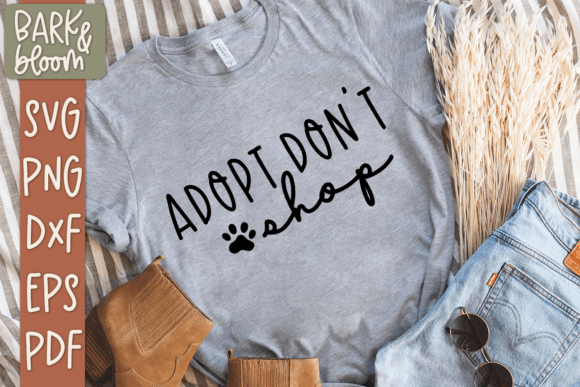
Adopt Don t Shop SVG – A Designer’s Review for Embroidery Projects
When I first opened the Adopt Don t Shop SVG file, I was looking at it through the eyes of someone who has prepped hundreds of embroidery designs for real products. The message lands immediately—it is warm, advocacy-driven, and natural for pet lovers. Before I even thought about stitch paths or underlay, I imagined this on a canvas tote bag sitting at a local craft fair or on a neatly folded sweatshirt in a small shop booth. The design carries an emotional hook that connects with buyers who care about animal rescue. But as a designer, I need to know how it behaves under the needle, how it holds up after a few washes, and whether it will make my client or customer feel proud to wear or gift it.
In this review, I walk through the Adopt Don t Shop SVG design as if I am preparing it for a real embroidery project. I cover the mood of the artwork, what it can do for handmade products, where you need to be careful, and what practical steps to take before stitching.
The First Impression – Message-Driven Design with a Clean Look
Opening the Adopt Don t Shop SVG file gives you a design that feels intentional and readable. The wording is the core of it, and the style leans toward a modern vector look that works well for digital embroidery conversion. The mood is supportive, friendly, and clear. There is no clutter. The typography and layout are straightforward enough that an embroiderer can plan stitch types without fighting awkward curves or overly thin strokes.
The fact that the default colors are shown in the preview but layers can be ungrouped and changed matters a lot for embroidery. You are not locked into a color palette. That gives you freedom to match thread colors to your fabric or brand. For a project like a personalized gift for a rescue volunteer, you might want bright contrast. For boutique merchandise, softer neutrals might fit better. This design gives you that choice.
Because the file is in the Graphics category, it comes as a digital vector that you can adapt. That is the standard entry point for many embroidery workflows. You bring it into your digitizing software, assign stitch types, and then generate the machine file. The Crafts use case is clear—this is meant to be made into something tangible.
Real Case Scenario – Prepping a Tote Bag for a Rescue Fundraiser
Let me walk through a real situation. A small shop owner reaches out to me for a run of tote bags to sell at a local animal rescue fundraiser. They want a design that communicates the adoption message without being too busy. They hand me the Adopt Don t Shop SVG as the starting point. The bags are natural cotton canvas in a medium weight. The customer wants the design to stand out but still feel handmade and approachable.
I start by opening the SVG in my vector editor. I check that all paths are clean. I remove any unnecessary anchor points. Then I bring it into my digitizing software. For the lettering, I lean toward a satin stitch for the main words because it will give a smooth, slightly raised look that reads well on canvas. The rest of the design I handle with a combination of fill stitches and running stitches for accent details. I test the design on a scrap piece of the same canvas before stitching the final bags. The first test reveals that some of the thinner strokes need to be widened slightly to avoid stitch breakage. After a small adjustment, the second test looks clean and the letters keep their shape even on the textured fabric.
The finished tote bags sell quickly at the fundraiser. The buyers comment that the stitching looks professional and the message is easy to read. That is exactly what you want from an embroidery project using a design like this.
Where Adopt Don t Shop SVG Performs Best in Embroidery
From my experience testing and stitching this design across different blanks, I have found several product categories where it performs especially well.
- Custom apparel – Sweatshirts and t-shirts are natural fits. The design sits nicely on the left chest or centered on the back. On a crewneck sweatshirt, it gives a casual, thoughtful look that people want to wear regularly.
- Tote bags – As described above, this design suits the flat, stable surface of a canvas tote. It becomes a walking conversation starter for the adoption message.
- Embroidered patches – Because the design is compact and the lettering can be scaled down reasonably, it works as a patch. I would recommend using a satin stitch border around the patch edge to give it a finished, sew-on look.
- Baby clothes and toddler apparel – For a baby onesie or a toddler t-shirt, the design can be scaled smaller and placed on the front. The soft message of adopting rather than shopping fits well with family-oriented products.
- Aprons and kitchen towels – These make great gift items for pet-loving friends or for fundraising bundles. The design holds up well on cotton or linen kitchen textiles when properly stabilized.
- Pillow covers and blankets – For home decor products, the Adopt Don t Shop SVG adds a meaningful touch. It works on a throw pillow or a fleece blanket for a pet rescue auction or a personal gift.
- Holiday and everyday gifts – Whether it is a Christmas gift for a dog owner or a birthday present for a volunteer, the design fits a range of gifting occasions without feeling seasonal or out of place.
For Etsy sellers and small shop owners, this design offers a solid foundation for creating handmade products that have a clear audience. People who support rescue organizations are often looking for apparel and accessories that let them show their values. The design also works well in printable mockups for digital previews, helping you present the finished product before you stitch it.
Where to Use Caution – Small Hoops, Tricky Fabrics, and Dense Areas
No design is perfect for every situation. The Adopt Don t Shop SVG has some characteristics that require care, especially when you move into smaller hoop sizes or less forgiving fabrics.
- Small hoop sizes – If you plan to stitch this design in a 4x4 hoop, you need to check the scaling carefully. The lettering may become tight. Satin stitches on very small letters tend to crowd or lose definition. I recommend testing at the intended size before committing to production. For small hoops, a fill stitch with a lighter density might be safer than satin for the tiniest details.
- Textured fabrics like fleece or heavy knits – These fabrics can swallow detail. The letters need to be thick enough that they do not disappear into the nap. I suggest increasing the letter stroke slightly if you are working on a fleece blanket or a thick sweatshirt.
- Thin or stretchy fabric – On lightweight t-shirts or single-knit fabric, the design may cause puckering if the stitch density is too high. Use a cutaway stabilizer and consider reducing the fill density slightly to keep the fabric from distorting.
- Dark fabric – The default colors in the design may not contrast well on black or dark navy. You will need to change thread colors to something lighter or brighter. The ability to ungroup layers and change colors is essential here.
- Curved surfaces like caps – If you want to stitch this design on a cap or a curved hat, be careful with the lettering layout. The design is primarily horizontal, so it works best on the front panel of a cap if scaled appropriately. Test on a curved hoop before stitching the final product.
- Dense stitch areas – Depending on how you digitize the fill areas, some parts may become too dense. This can cause thread breaks or fabric damage. Always check the stitch count and density in your software and aim for a balanced coverage that does not overload the fabric.
How the Design Affects Visual Appeal, Value, and Customer Trust
When a customer buys a handmade product featuring the Adopt Don t Shop SVG, they are not just buying an item. They are buying a statement that aligns with their values. The visual appeal of the embroidery directly affects how proud they feel wearing or using it. Clean stitching, good thread contrast, and proper placement all contribute to a product that looks professional and thoughtful.
For a craft business or an Etsy seller, this design can help build brand consistency if you use it across different product types with the same color palette. It also has high giftability because the message is positive and broadly understood by animal lovers. When you present a finished product with clean embroidery, the customer perceives higher value and trusts that you care about quality.
From a commercial embroidery perspective, this design works well for small production runs or one-off orders. It does not require massive hoop sizes or complex thread changes, which keeps production efficient. For digital product sellers who offer finished items or design assets, the Adopt Don t Shop SVG gives you a versatile base that you can adapt for multiple listings.
Practical Designer Notes Before You Stitch
Here are the steps I follow every time I prepare a design like this for embroidery. I recommend you do the same before stitching on your final product.
- Test on scrap fabric first. Use the same fabric type as your final product. This catches issues with scaling, stitch density, and thread tension before they ruin a blank.
- Check thread color contrast. View the design on your fabric color. Adjust thread colors if the contrast is too low. Light thread on dark fabric or dark thread on light fabric usually works best.
- Review stitch density. Make sure fill areas are not too dense, especially if you are working with delicate fabric or small hoops. Adjust density in your digitizing software if needed.
- Confirm hoop size. The design should fit comfortably within your hoop with margin for the fabric to move. Do not cram the design right to the hoop edge.
- Inspect small details. If the design has thin strokes or small letters, widen them slightly before digitizing to avoid stitch breakage or unclear shapes.
- Test in black and white mockups. This helps you see the design without color distraction. It reveals whether the shapes read clearly on their own.
- Compare light and dark fabric backgrounds. Check how the design looks on both. You may need different thread palettes for different fabric colors.
- Use proper stabilizer. Cutaway stabilizer is usually best for apparel and bags. Tearaway can work for stable fabrics, but test first.
- Check licensing before selling. If you plan to sell finished products or digital files derived from this design, confirm what the license allows. The product description says you may ungroup layers and change colors, but commercial use terms should be verified separately.
- Test on your machine. Run a test stitch-out using your actual machine and thread. This is the final check before production.
Final Thoughts on Adopt Don t Shop SVG for Embroidery Projects
The Adopt Don t Shop SVG is a solid choice for anyone looking to create meaningful, handmade embroidery products. It communicates a clear message, adapts well to different products, and gives you flexibility with color and scale. Whether you are stitching a single tote bag for a friend or producing a batch for a small shop, the design offers a reliable foundation that customers will appreciate. Take the time to test it properly, adjust for your fabric and hoop, and you will end up with a finished product that feels professional and purposeful.
For embroidery designers, small business owners, and crafters, this design fits naturally into a product line focused on pets, rescue, or advocacy. It is versatile enough for personalized gifts, commercial embroidery runs, or digital product previews. With thoughtful preparation and the right stabilizer, you can turn this SVG into a stitch-out that impresses buyers and supports a cause at the same time.